RSS

What Are Condo Fees? A Calgary Buyer’s Guide to Understanding Condominium Costs

If you are considering buying a condominium in Calgary, one of the first things you will notice is the monthly condo fee. For many buyers, especially first-time purchasers, condo fees can feel confusing or unclear.

What exactly are you paying for?
Why do some buildings charge more than others?
And what should you look for before making an offer?

Understanding condo fees is essential before purchasing any condo property in Calgary.


What Is a Condo Fee?

A condo fee, also known as a condominium contribution, is a monthly payment made by every unit owner to the condo corporation. The condo corporation is responsible for maintaining and managing the common areas of the building or complex.

When you buy a condo, you own your unit, but you also share ownership of common property such as hallways, roofing, exterior walls, landscaping, elevators, and parking areas. Condo fees are how those shared expenses are funded.


What Do Condo Fees Typically Cover in Calgary?

Every building is different, but most Calgary condo fees cover some combination of the following:

• Exterior maintenance including roofing and siding
• Snow removal and landscaping
• Building insurance for common areas
• Property management fees
• Reserve fund contributions
• Cleaning and maintenance of shared spaces
• Elevators and mechanical systems
• Amenities such as gyms, pools, or party rooms
• Sometimes utilities such as heat and water

It is important to review exactly what is included in the fee for each building, as coverage varies widely.


Why Do Condo Fees Vary So Much?

Condo fees in Calgary can range significantly depending on several factors:

1. Age of the Building

Older buildings often require more maintenance and higher reserve fund contributions.

2. Amenities

Buildings with pools, gyms, concierge services, or underground heated parking generally have higher operating costs.

3. Size of the Complex

Smaller buildings have fewer owners sharing expenses, which can increase the cost per unit.

4. Utilities Included

Some condo fees include heat and water, while others do not.

A higher condo fee is not automatically a bad sign. What matters is whether the fee reflects proper financial planning and building upkeep.


What Is a Reserve Fund?

A portion of every condo fee goes into a reserve fund. This fund is used for major repairs and replacements such as:

• Roof replacement
• Exterior repairs
• Window replacement
• Elevator upgrades
• Parking structure repairs

In Alberta, condo corporations are required to complete regular reserve fund studies to determine how much money should be saved for future repairs.

A healthy reserve fund helps reduce the risk of special assessments.


What Is a Special Assessment?

A special assessment occurs when the condo corporation does not have enough money in the reserve fund to cover a major repair. When this happens, unit owners must pay an additional lump sum.

In Calgary, special assessments can range from a few thousand dollars to significantly more depending on the issue.

This is why reviewing condo documents before purchasing is critical.


How to Evaluate Condo Fees Properly

When reviewing a condo in Calgary, you should examine:

• The current condo fee amount
• What is included in the fee
• The reserve fund study
• Financial statements
• Meeting minutes
• Any upcoming major repairs
• History of fee increases

The goal is not to find the lowest condo fee. The goal is to find a well-managed building with responsible financial planning.


Final Thoughts for Calgary Condo Buyers

Condo fees are part of condo ownership. They fund maintenance, protect property values, and ensure shared spaces remain functional and safe.

A well-managed condo corporation with reasonable fees and a healthy reserve fund can provide stability and long-term value. On the other hand, poorly managed buildings can create financial uncertainty.

Before purchasing any condominium in Calgary, take the time to understand exactly what the condo fee covers and review the building’s financial health carefully.

If you are considering buying a condo and would like help reviewing documents or comparing buildings, I would be happy to guide you through the process.

Read

10 Essential Tips to Increase Your Home’s Value Before Selling in Calgary

Selling your home can feel overwhelming, but the right preparation can significantly increase your home’s value and attract more qualified buyers. Industry experts agree that simple improvements and smart upgrades can raise a home’s selling price by as much as 20 percent. A well maintained and move in ready property not only sells faster but often attracts multiple offers, which can increase the final sale price.

Selling a home in Calgary also comes with unique market dynamics. Seasonal weather, neighborhood competition, and buyer expectations all play a role in how quickly a home sells and at what price. Whether you are listing in NW communities like Edgemont or Evanston, inner-city neighborhoods, or surrounding areas such as Cochrane or Airdrie, proper preparation can significantly impact your results.

In Calgary’s market, buyers are highly informed and often compare multiple listings before making an offer. Homes that feel well maintained, thoughtfully prepared, and move-in ready tend to stand out, generate more showings, and attract stronger offers.

In this guide, you will learn ten essential tips that help homeowners prepare their property for a profitable sale. From boosting curb appeal to refreshing kitchens and bathrooms, these proven strategies can make your home more appealing to buyers and help maximize your market value.

Key Takeaways

• First impressions drive buyer interest. Strong curb appeal and well maintained exteriors set the tone before buyers even step inside and can influence how they perceive the home’s value.

• Small repairs matter more than many sellers expect. Addressing visible issues like leaks, chipped paint, or loose fixtures helps prevent buyers from assuming larger hidden problems.

• Decluttering and depersonalizing allow buyers to emotionally connect with the space. A clean, neutral environment helps them imagine the home as their own rather than someone else’s.

• A deep clean signals pride of ownership. Homes that look spotless are often perceived as better maintained, which can reduce buyer hesitation and strengthen offers.

• Kitchens and bathrooms carry the most weight in buyer decision-making. Even modest updates in these areas can deliver a strong return by making the home feel current and move-in ready.

• Neutral color palettes appeal to the widest audience. Soft, neutral tones make rooms feel brighter, larger, and easier for buyers to visualize their own style.

• Thoughtful staging highlights the home’s best features. Proper furniture placement improves flow, emphasizes space, and helps buyers understand how each room can be used.

• Good lighting enhances mood and functionality. Bright, well-lit homes feel warmer, more inviting, and more valuable, especially during showings and open houses.

• Preparation often leads to stronger outcomes. Homes that are properly prepared tend to sell faster, attract more interest, and are more likely to receive competitive offers.

1. Enhance Curb Appeal

Curb appeal sets expectations before buyers even walk through the door. When a home looks well cared for from the outside, buyers are more likely to assume the same about the interior. Simple tasks such as mowing the lawn, trimming hedges, clearing walkways, and refreshing the front door can dramatically change how a property is perceived. Outdoor lighting, clean house numbers, and a tidy entry also contribute to a welcoming first impression that encourages buyers to step inside with confidence.

2. Declutter and Depersonalize

Buyers need to imagine the home as their own, not as someone else’s space. Too much furniture, personal photos, or bold décor can distract buyers and make rooms feel smaller. Decluttering opens up floor space and highlights the layout, while depersonalizing helps buyers emotionally connect with the property. Consider removing excess items from closets and storage areas as well, since buyers often check these spaces to evaluate functionality.

3. Deep Clean Your Home

A deep clean signals pride of ownership. Buyers notice details such as clean baseboards, spotless windows, fresh-smelling rooms, and well-maintained appliances. Dirt, grime, or lingering odors can raise concerns about overall maintenance. Professional cleaning services are often worth the cost, as they ensure every surface is addressed and help the home show at its absolute best.

4. Make Necessary Repairs

Unfinished repairs can quickly turn buyers away. Minor issues like dripping faucets, squeaky doors, cracked tiles, or peeling paint may seem small, but they can cause buyers to question what larger problems might exist. Taking care of these items before listing helps eliminate objections, builds buyer confidence, and can reduce price negotiations later in the process.

5. Update the Kitchen

The kitchen plays a major role in how buyers judge value. While full renovations are not always necessary, strategic updates can make a noticeable difference. Painting cabinets, updating hardware, replacing outdated light fixtures, or installing a new backsplash can refresh the space without significant expense. A clean, modern-looking kitchen often helps buyers feel the home is move-in ready.

6. Refresh Bathrooms

Bathrooms are closely inspected by buyers and strongly influence overall impressions. Simple improvements such as re-caulking tubs, replacing worn fixtures, updating mirrors, and adding fresh paint can make bathrooms feel cleaner and more modern. Bright lighting, clean grout, and fresh linens can elevate the space and create a spa-like feel that buyers appreciate.

7. Create More Space

How a home feels can be just as important as its actual square footage. Rearranging furniture to improve flow can make rooms appear larger and more functional. Removing oversized or unnecessary pieces helps highlight the room’s purpose and layout. In some cases, opening up non-structural areas can enhance sightlines and create a more open, connected living space.

8. Stage Your Home

Staging helps buyers understand how each room can be used. Thoughtful furniture placement, neutral décor, and simple accents can draw attention to the home’s best features while minimizing flaws. Professionally staged homes often photograph better, show better, and attract more interest online and in person. Even partial staging can have a strong impact.

9. Neutralize Color Schemes

Neutral colors appeal to a broader range of buyers and help spaces feel bright and clean. Bold or highly personalized colors can limit buyer appeal and distract from the home itself. Soft neutrals on walls and consistent tones throughout the home create a cohesive look that feels modern and move-in ready.

10. Improve Lighting

Lighting affects how buyers feel in a space. Dark rooms can feel smaller and less inviting, while well-lit rooms feel open and welcoming. Updating outdated fixtures, using higher-quality bulbs, and adding floor or table lamps can significantly improve ambiance. Natural light should be maximized by opening curtains and keeping windows clean during showings.


Bonus Tip: Get Local Calgary Market Guidance

Not every improvement delivers the same return in every Calgary neighborhood. A local real estate professional can help you decide which updates make sense for your specific area and price range. Strategic preparation, accurate pricing, and strong marketing often lead to faster sales and better outcomes.

Read

Five Best Kept Secrets for Home Buyers

Buying a home is one of the largest financial and emotional decisions you will ever make. Whether you are a first time buyer or an experienced homeowner entering the market again, it is easy to feel overwhelmed by choices, costs, and fast-moving listings. Understanding the most important steps in advance can help you avoid unexpected expenses, stay within your budget, and feel confident throughout the process. These five best kept secrets for home buyers will guide you through the key things to watch for so you can make informed decisions and find the home that truly fits your needs.


Key Takeaways

• Be open minded when searching for a home, since minor cosmetic issues can be easily changed to suit your taste.
• Do not compromise on critical flaws. Take a realistic look at your budget and time before considering a property that requires extensive repairs.
• Get pre approved for a mortgage and consider hidden costs like HOA fees and utilities. This helps you shop within your budget and avoid financial surprises.


1. Be Open Minded

Many home buyers instantly reject a property because of small cosmetic details. While understandable, this can drastically limit your options in a competitive real estate market.

Cosmetic issues are the easiest and cheapest things to fix. Yet they often distract buyers from a home that may have a strong layout, good bones, excellent location, or long term appreciation potential.

Examples of easy cosmetic upgrades:

• Repainting walls
• Swapping outdated light fixtures
• Replacing an old faucet or shower head
• Removing dated wallpaper
• Installing new cabinet handles
• Updating window coverings

These upgrades can cost a few hundred dollars, yet many buyers mistakenly assume they are deal breakers. Keeping an open mind allows you to see opportunities that other buyers miss, which can lead to better pricing and less competition.


2. Do Not Overlook Critical Flaws

While cosmetic flaws are fixable, critical issues are not. It is essential to distinguish between the two. A home with major structural or mechanical problems can quickly become a financial burden.

Examples of critical flaws that require caution:

• Horizontal foundation cracks
• Significant electrical or plumbing problems
• A failing roof
• Mold or water penetration
• Outdated or unsafe systems

These repairs can cost tens of thousands of dollars. Even if the price appears attractive, the long term financial and emotional strain may outweigh the initial savings.

Before making an offer on a home that needs major work, evaluate your budget, renovation timeline, and lifestyle. If the home is not move-in ready, make sure you are realistically prepared for the repairs.


3. Get Pre Approved and Watch for Hidden Costs

Getting pre approved is one of the most important steps a buyer can take. It sets the foundation for a focused and financially responsible home search. A mortgage pre approval gives you clarity on how much you can borrow, what monthly payments will look like, and which price ranges to avoid.

Benefits of getting pre approved:

• You avoid falling in love with homes outside your budget
• You know your monthly mortgage payments in advance
• You gain negotiating power when making offers
• Sellers take your offer more seriously

But pre approval is only the beginning. Many buyers forget to account for hidden costs that come with homeownership.

Common hidden costs to consider:

• HOA or condo fees
• Property taxes
• Home insurance
• Utilities
• Maintenance and repairs
• Welcome taxes or land transfer fees

These costs influence your true affordability. Understanding them early prevents stress and ensures you make a financially sound decision.


4. Shop, Shop, Shop

The more homes you see, the better your understanding of the market. Many buyers start with enthusiasm but only view a few listings, which limits their ability to spot value or compare features.

Ways to shop effectively:

• Attend open houses regularly
• Set alerts for new listings in your price range
• Compare similar homes in different neighborhoods
• Take notes to track prices, conditions, and features
• Pay attention to how quickly homes sell

Seeing multiple homes helps you sharpen your instincts. You will start recognizing which homes are overpriced, which ones are underpriced, and which ones offer the best long term value.

Buyers who shop actively tend to make faster and more confident decisions when the right property appears.

If you want help staying ahead of the market, I can set up personalized search alerts for you. These alerts send you new listings that match your criteria the moment they hit the market. Just reach out and I will create a tailored search so you never miss an opportunity.


5. Always Get a Professional Inspection

A home inspection is one of the most underrated steps in the buying process. For roughly two hundred dollars, you get access to a trained professional who can identify issues that are not visible to the untrained eye.

A home inspector can help you:

• Detect hidden defects
• Uncover safety hazards
• Understand the lifespan of major components
• Estimate upcoming repair costs
• Renegotiate based on findings

An inspection can save you thousands. More importantly, it protects you from buying a home with significant problems that could affect your comfort, safety, and budget.

Home inspectors provide written reports, photos, and recommendations. Use this information to decide whether to proceed, renegotiate, or walk away.


Final Thoughts: Buying a Home with Confidence

Buying a home is not just about finding the right property. It is about understanding the market, preparing financially, and making informed decisions at every step. When you keep an open mind, avoid major flaws, prepare for hidden costs, shop actively, and invest in a professional inspection, you put yourself in the strongest possible position.

Whether you are buying your first home in Calgary or upgrading within the city, these five best kept secrets will help you approach the journey with confidence, clarity, and peace of mind.

Read

Should You Buy First or Sell First? A Case Study Based on Current Calgary Market Activity

One of the biggest decisions homeowners face is whether to buy their next home before selling their current one. The right answer depends heavily on your financial comfort level, because timing directly affects how much pressure you face and how strongly you can negotiate.

This case study uses current Calgary market data, including 100 real listings with quick-possession timelines, to show how urgency affects sale prices.


If You Are Financially Able to Buy First

Buying before selling can offer several benefits:

• Convenience. Move on your own schedule.
• Less stress. No pressure to rush your home search.
• Flexibility. Time to renovate or prepare your new home before moving in.
• Smoother transition. No need for temporary housing or double moves.

However, there are important considerations:

• Your current home will continue to incur monthly expenses.
• You will continue paying utilities, taxes, insurance, and maintenance on the existing property.
• If your home takes longer to sell, timelines can become tight, which reduces negotiation strength.

Buying first makes the most sense if you are comfortable carrying your existing housing costs for as long as needed.


If Covering Your Current Home’s Costs Longer Is Not Comfortable

This is where many homeowners experience stress. Once you buy your next home and conditions start to firm, a countdown begins on selling your current property. That time pressure often leads to quicker price reductions and decisions driven by urgency rather than strategy.

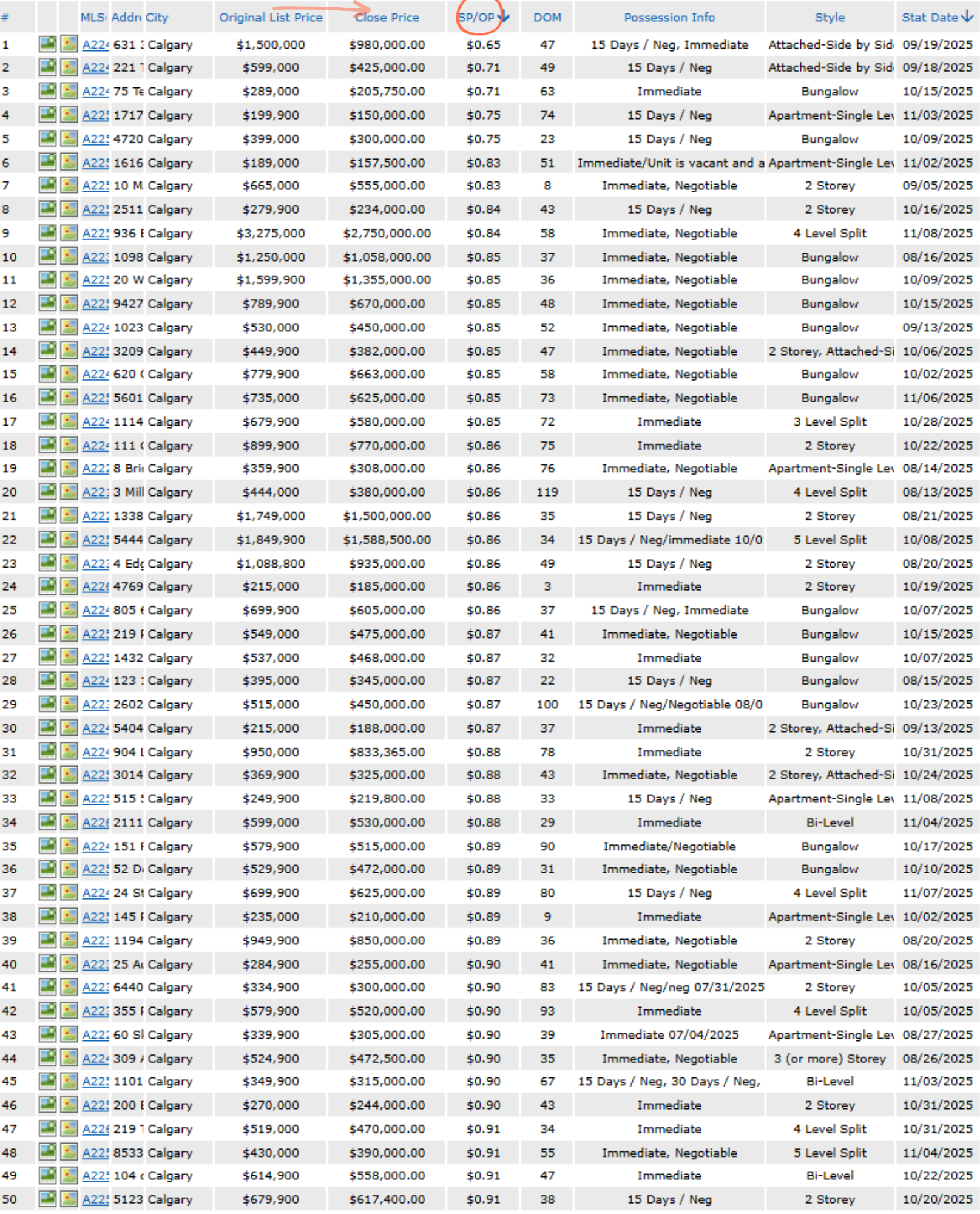
To see how this plays out, I analyzed 100 Calgary homes sold in the last 90 days that required 15-day or immediate possession. These listings were chosen because short possession timelines are one of the clearest signs of seller urgency.

Urgency often happens when:

• The home is vacant
• The seller is already committed to another home
• Financing timelines require a timely sale
• There are firm life or work deadlines
• The seller is prioritizing speed over holding out for full market value

Even when priced aggressively, urgency impacts results.


Snapshot of the 100 Listings Pulled

Below is the screenshot of the 100 homes analyzed. Each listing requested possession within 15 days or immediate availability. This lets us isolate situations where sellers were likely under financial or timeline pressure.


What the Data Shows: Urgent Sellers Net Less Money

From the 100 urgent listings reviewed:

Urgent SP/LP average: 94.92 percent
Calgary market average: 97.66 percent

That is nearly a 3 percent difference.

Dollar Breakdown

On a 600,000 dollar home:

• Market average: 585,960 dollars
• Urgent seller: 569,520 dollars
Difference: 16,440 dollars lost

This loss often happens through small price reductions made under pressure.


Real Examples of Pricing History

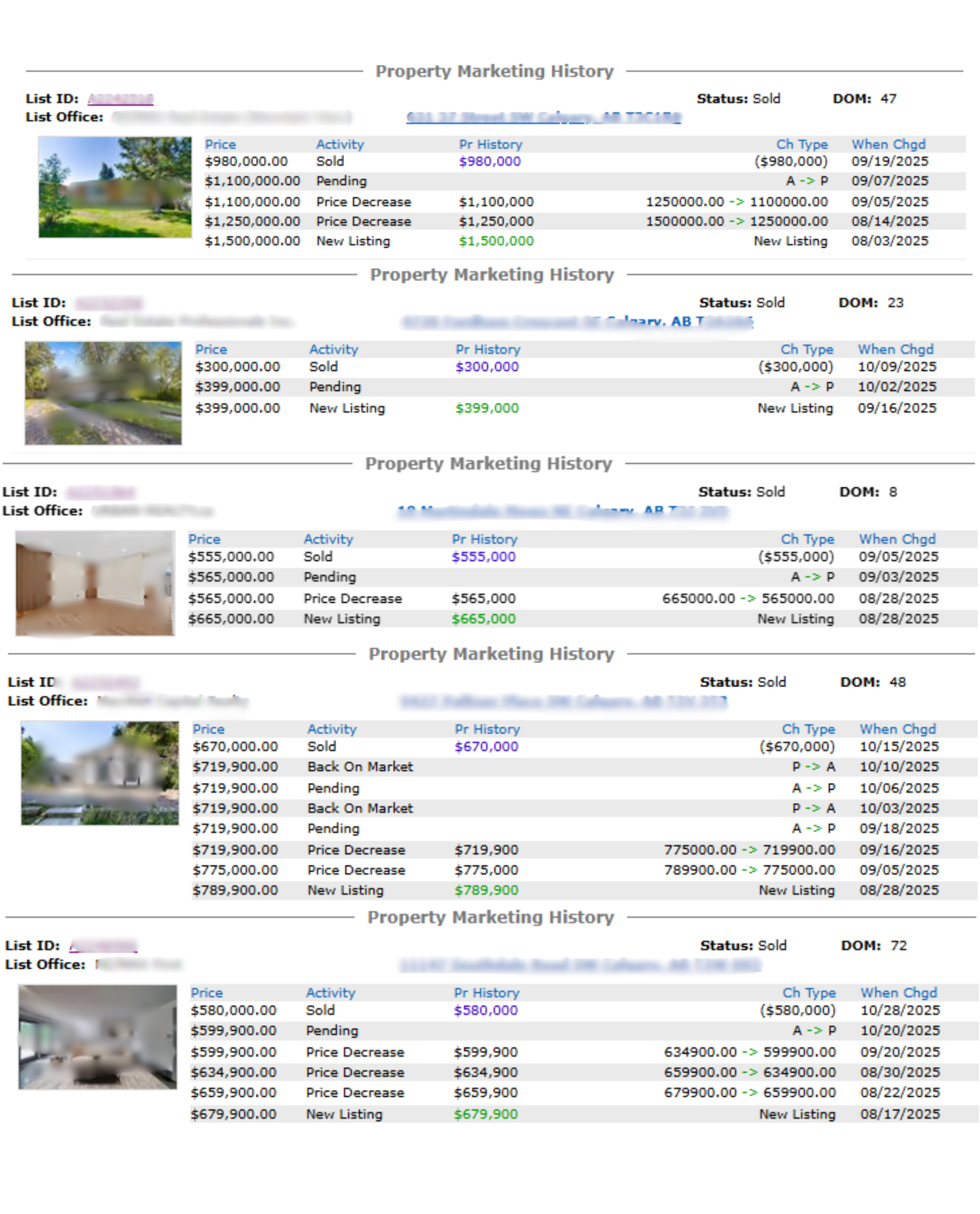
Here are real Calgary examples showing how pricing adjustments occur for homes with short possession timelines.

What These Examples Show

Even well-priced homes often need further reductions as deadlines approach. This is consistent across the dataset: when urgency increases, leverage decreases, and the final sale price typically drops.


Why Selling First Protects Your Equity

Selling first gives you:

• Clear knowledge of your available equity
• Stronger offers on your next purchase
• Full control over timing
• Freedom from deadline pressure
• Decisions based on strategy instead of urgency

Buying first without financial breathing room can lead to:

• Reduced negotiation strength
• Becoming an urgent seller
• Accepting lower offers
• Additional carrying costs on your current home until it sells

Financial Example

If your current mortgage payment is 2,500 dollars per month and your home takes 3 months to sell, that is 7,500 dollars in ongoing costs.

Combine that with a potential price reduction of 20,000 to 30,000 dollars that urgent sellers commonly experience, and the total financial impact can reach:

27,500 to 37,500 dollars.

This is not about pushing one option over the other. It is simply the financial reality of how timing affects your outcome.


Ready to Plan Your Move? Let’s Talk About Your Situation

Every homeowner’s situation is different. If you’re thinking about moving and want to understand whether buying first or selling first makes the most sense, I’m happy to walk you through it.

I can show you what your personalized timeline could look like, explain your options clearly, and help you plan a move that protects your equity and reduces stress.

If you would like to chat about your situation or see a personalized timeline, feel free to REACH OUT any time.

Read

Buying a Home: The Basics

Smart Steps to Buying Your Home in Calgary with Confidence

Buying a home in Calgary is one of life’s biggest milestones — exciting, but it can also feel overwhelming. The key is preparation. With the right plan, you can make confident, informed decisions that set you and your family up for long-term success.

1. Get Pre-Approved & Set Your Budget
Before you start browsing Calgary homes for sale, get pre-approved for a mortgage. A pre-approval letter shows sellers that you’re a serious buyer and financially ready to move forward. At the same time, set a realistic budget, factoring in not just the purchase price but also ongoing costs like property taxes, insurance, and maintenance. Knowing your financial limits helps you focus on homes that truly fit your lifestyle.

2. Research the Calgary Real Estate Market
Explore neighborhoods, attend open houses, and talk to local real estate agents to understand market trends and property values. This groundwork helps you spot a good deal and ensures your decision aligns with your goals, whether you’re a first-time homebuyer in Calgary or looking to upgrade to a larger family home.

3. Evaluate Homes and Comparable Properties
Once you find a home you like, work with your realtor to review comparable properties in the area. Understanding what other Calgary homes are selling for gives you an edge when making an offer.

4. Conduct a Professional Home Inspection
Never skip a home inspection in Calgary. A professional inspection can uncover hidden issues and give you leverage in negotiations, helping you avoid costly surprises down the road.

5. Negotiate with Confidence
Use the insights you’ve gathered from your research, comparable properties, and inspection to negotiate a fair price. Every detail counts, especially in the competitive Calgary real estate market.


The Bottom Line:
Buying a home in Calgary doesn’t have to be stressful. With pre-approval, market research, property comparisons, thorough inspections, and confident negotiations, you can navigate the process smoothly and find a Calgary home your family will love for years to come.

Ready to take the next step?
Download our Free Homebuyer Guide for expert tips, checklists, and resources to make buying a home in Calgary easier.

👉 Access the Buyer Guide Here under Buy > Buying Resources

Read
Data is supplied by Pillar 9™ MLS® System. Pillar 9™ is the owner of the copyright in its MLS®System. Data is deemed reliable but is not guaranteed accurate by Pillar 9™.
The trademarks MLS®, Multiple Listing Service® and the associated logos are owned by The Canadian Real Estate Association (CREA) and identify the quality of services provided by real estate professionals who are members of CREA. Used under license.