RSS

What Are Condo Fees? A Calgary Buyer’s Guide to Understanding Condominium Costs

If you are considering buying a condominium in Calgary, one of the first things you will notice is the monthly condo fee. For many buyers, especially first-time purchasers, condo fees can feel confusing or unclear.

What exactly are you paying for?
Why do some buildings charge more than others?
And what should you look for before making an offer?

Understanding condo fees is essential before purchasing any condo property in Calgary.


What Is a Condo Fee?

A condo fee, also known as a condominium contribution, is a monthly payment made by every unit owner to the condo corporation. The condo corporation is responsible for maintaining and managing the common areas of the building or complex.

When you buy a condo, you own your unit, but you also share ownership of common property such as hallways, roofing, exterior walls, landscaping, elevators, and parking areas. Condo fees are how those shared expenses are funded.


What Do Condo Fees Typically Cover in Calgary?

Every building is different, but most Calgary condo fees cover some combination of the following:

• Exterior maintenance including roofing and siding
• Snow removal and landscaping
• Building insurance for common areas
• Property management fees
• Reserve fund contributions
• Cleaning and maintenance of shared spaces
• Elevators and mechanical systems
• Amenities such as gyms, pools, or party rooms
• Sometimes utilities such as heat and water

It is important to review exactly what is included in the fee for each building, as coverage varies widely.


Why Do Condo Fees Vary So Much?

Condo fees in Calgary can range significantly depending on several factors:

1. Age of the Building

Older buildings often require more maintenance and higher reserve fund contributions.

2. Amenities

Buildings with pools, gyms, concierge services, or underground heated parking generally have higher operating costs.

3. Size of the Complex

Smaller buildings have fewer owners sharing expenses, which can increase the cost per unit.

4. Utilities Included

Some condo fees include heat and water, while others do not.

A higher condo fee is not automatically a bad sign. What matters is whether the fee reflects proper financial planning and building upkeep.


What Is a Reserve Fund?

A portion of every condo fee goes into a reserve fund. This fund is used for major repairs and replacements such as:

• Roof replacement
• Exterior repairs
• Window replacement
• Elevator upgrades
• Parking structure repairs

In Alberta, condo corporations are required to complete regular reserve fund studies to determine how much money should be saved for future repairs.

A healthy reserve fund helps reduce the risk of special assessments.


What Is a Special Assessment?

A special assessment occurs when the condo corporation does not have enough money in the reserve fund to cover a major repair. When this happens, unit owners must pay an additional lump sum.

In Calgary, special assessments can range from a few thousand dollars to significantly more depending on the issue.

This is why reviewing condo documents before purchasing is critical.


How to Evaluate Condo Fees Properly

When reviewing a condo in Calgary, you should examine:

• The current condo fee amount
• What is included in the fee
• The reserve fund study
• Financial statements
• Meeting minutes
• Any upcoming major repairs
• History of fee increases

The goal is not to find the lowest condo fee. The goal is to find a well-managed building with responsible financial planning.


Final Thoughts for Calgary Condo Buyers

Condo fees are part of condo ownership. They fund maintenance, protect property values, and ensure shared spaces remain functional and safe.

A well-managed condo corporation with reasonable fees and a healthy reserve fund can provide stability and long-term value. On the other hand, poorly managed buildings can create financial uncertainty.

Before purchasing any condominium in Calgary, take the time to understand exactly what the condo fee covers and review the building’s financial health carefully.

If you are considering buying a condo and would like help reviewing documents or comparing buildings, I would be happy to guide you through the process.

Read

Should You Buy First or Sell First? A Case Study Based on Current Calgary Market Activity

One of the biggest decisions homeowners face is whether to buy their next home before selling their current one. The right answer depends heavily on your financial comfort level, because timing directly affects how much pressure you face and how strongly you can negotiate.

This case study uses current Calgary market data, including 100 real listings with quick-possession timelines, to show how urgency affects sale prices.


If You Are Financially Able to Buy First

Buying before selling can offer several benefits:

• Convenience. Move on your own schedule.
• Less stress. No pressure to rush your home search.
• Flexibility. Time to renovate or prepare your new home before moving in.
• Smoother transition. No need for temporary housing or double moves.

However, there are important considerations:

• Your current home will continue to incur monthly expenses.
• You will continue paying utilities, taxes, insurance, and maintenance on the existing property.
• If your home takes longer to sell, timelines can become tight, which reduces negotiation strength.

Buying first makes the most sense if you are comfortable carrying your existing housing costs for as long as needed.


If Covering Your Current Home’s Costs Longer Is Not Comfortable

This is where many homeowners experience stress. Once you buy your next home and conditions start to firm, a countdown begins on selling your current property. That time pressure often leads to quicker price reductions and decisions driven by urgency rather than strategy.

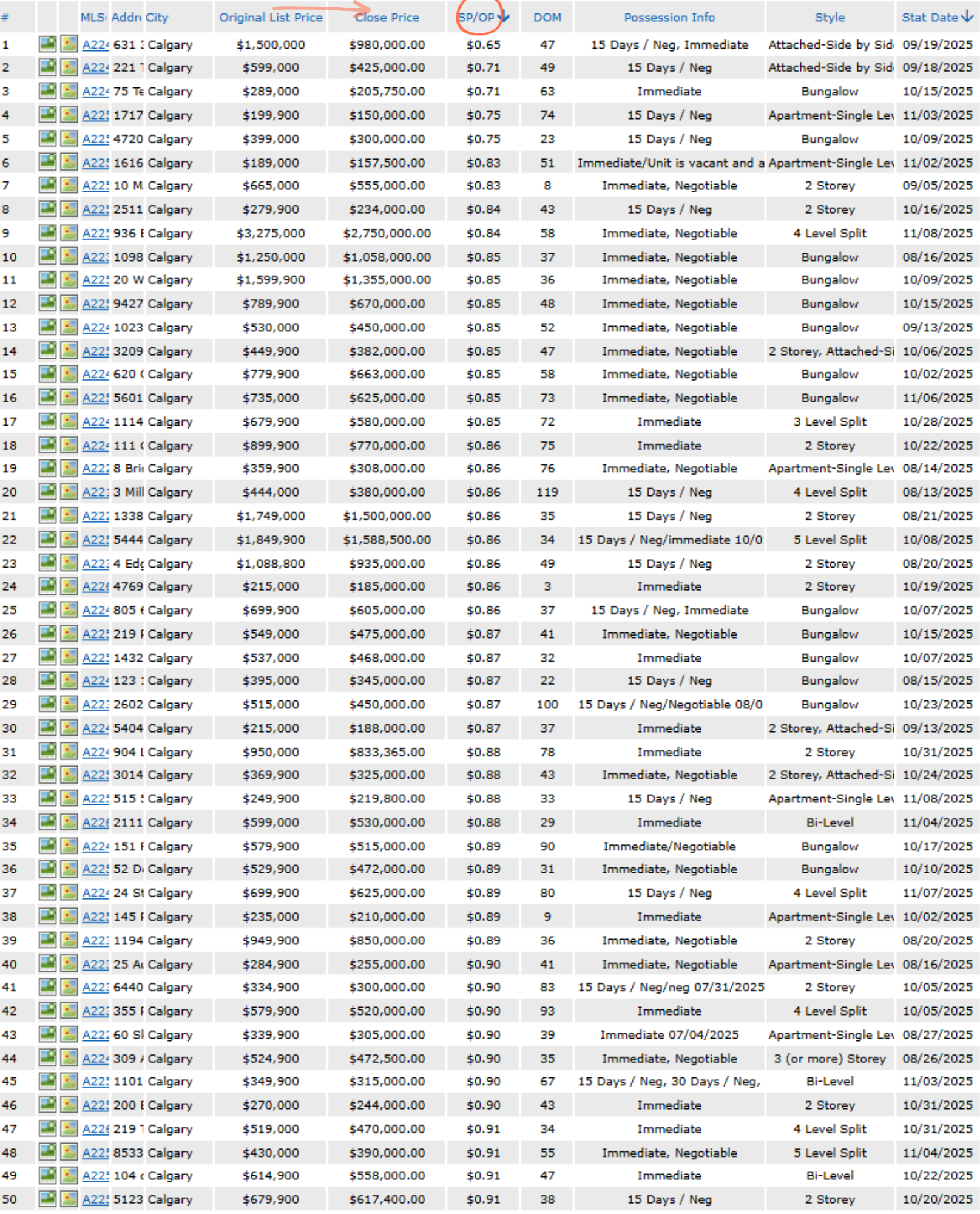
To see how this plays out, I analyzed 100 Calgary homes sold in the last 90 days that required 15-day or immediate possession. These listings were chosen because short possession timelines are one of the clearest signs of seller urgency.

Urgency often happens when:

• The home is vacant
• The seller is already committed to another home
• Financing timelines require a timely sale
• There are firm life or work deadlines
• The seller is prioritizing speed over holding out for full market value

Even when priced aggressively, urgency impacts results.


Snapshot of the 100 Listings Pulled

Below is the screenshot of the 100 homes analyzed. Each listing requested possession within 15 days or immediate availability. This lets us isolate situations where sellers were likely under financial or timeline pressure.


What the Data Shows: Urgent Sellers Net Less Money

From the 100 urgent listings reviewed:

Urgent SP/LP average: 94.92 percent
Calgary market average: 97.66 percent

That is nearly a 3 percent difference.

Dollar Breakdown

On a 600,000 dollar home:

• Market average: 585,960 dollars
• Urgent seller: 569,520 dollars
Difference: 16,440 dollars lost

This loss often happens through small price reductions made under pressure.


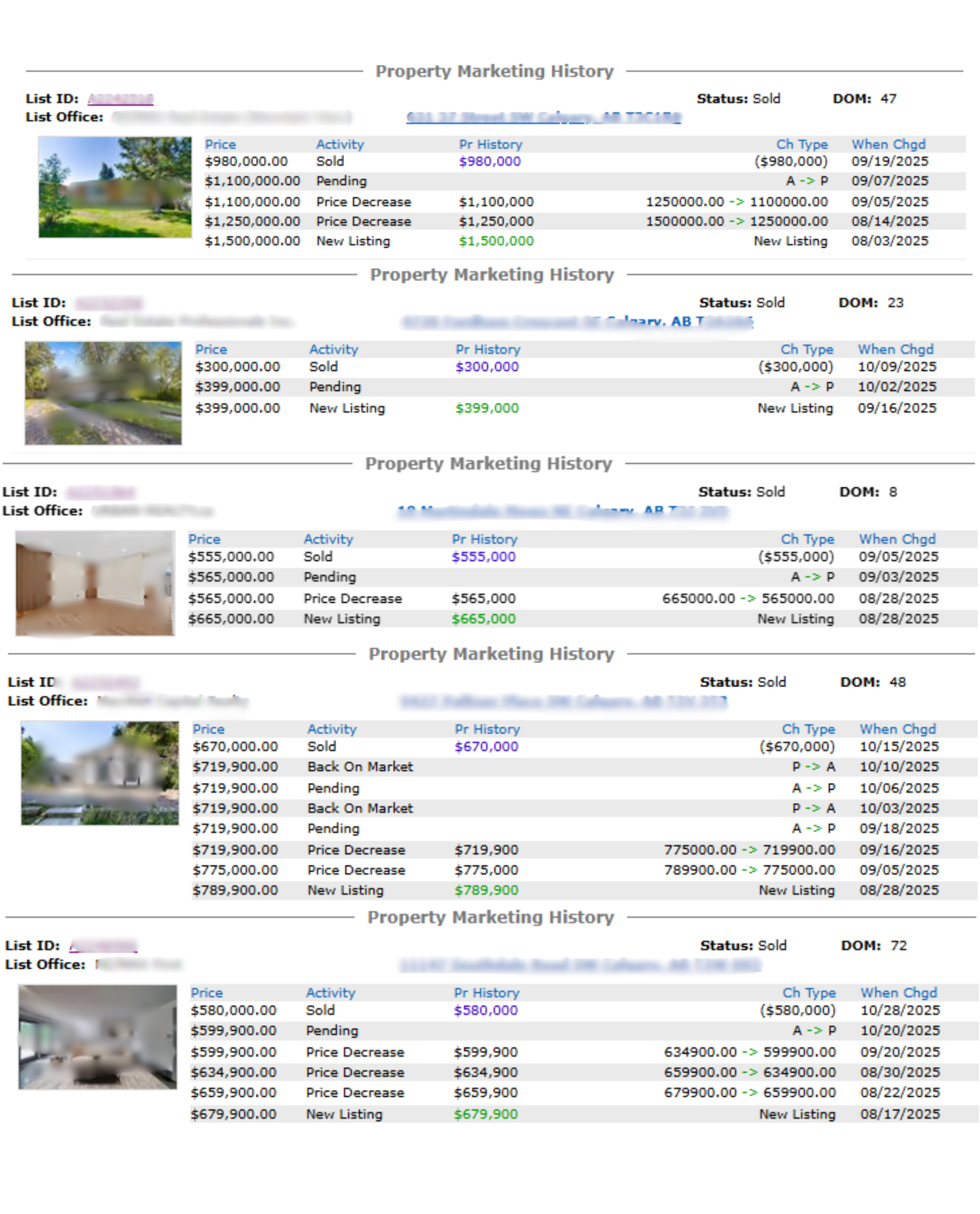
Real Examples of Pricing History

Here are real Calgary examples showing how pricing adjustments occur for homes with short possession timelines.

What These Examples Show

Even well-priced homes often need further reductions as deadlines approach. This is consistent across the dataset: when urgency increases, leverage decreases, and the final sale price typically drops.


Why Selling First Protects Your Equity

Selling first gives you:

• Clear knowledge of your available equity
• Stronger offers on your next purchase
• Full control over timing
• Freedom from deadline pressure
• Decisions based on strategy instead of urgency

Buying first without financial breathing room can lead to:

• Reduced negotiation strength
• Becoming an urgent seller
• Accepting lower offers
• Additional carrying costs on your current home until it sells

Financial Example

If your current mortgage payment is 2,500 dollars per month and your home takes 3 months to sell, that is 7,500 dollars in ongoing costs.

Combine that with a potential price reduction of 20,000 to 30,000 dollars that urgent sellers commonly experience, and the total financial impact can reach:

27,500 to 37,500 dollars.

This is not about pushing one option over the other. It is simply the financial reality of how timing affects your outcome.


Ready to Plan Your Move? Let’s Talk About Your Situation

Every homeowner’s situation is different. If you’re thinking about moving and want to understand whether buying first or selling first makes the most sense, I’m happy to walk you through it.

I can show you what your personalized timeline could look like, explain your options clearly, and help you plan a move that protects your equity and reduces stress.

If you would like to chat about your situation or see a personalized timeline, feel free to REACH OUT any time.

Read
Data is supplied by Pillar 9™ MLS® System. Pillar 9™ is the owner of the copyright in its MLS®System. Data is deemed reliable but is not guaranteed accurate by Pillar 9™.
The trademarks MLS®, Multiple Listing Service® and the associated logos are owned by The Canadian Real Estate Association (CREA) and identify the quality of services provided by real estate professionals who are members of CREA. Used under license.